Health and safety: a priority in day-to-day operations
For Padana Tubi, safeguarding the health and safety of its employees is a key priority, closely linked to the continuity and effectiveness of the company’s operations.
The company promotes a shared safety culture, based on the active involvement of all employees and constant monitoring of operating conditions. This approach enables all aspects relating to health and safety to be closely monitored, thereby strengthening the ability to prevent risks and ensure suitable working environments.
Padana Tubi regularly organises training and induction programmes on health and safety at work, in line with current legislation and the operational requirements of the various departments.
The training programmes cover both general and specific topics and are accompanied by awareness-raising activities, with the aim of encouraging careful and appropriate behaviour in the course of daily activities.
Each year, the company draws up a structured training plan, which is subject to updates, and uses accredited organisations and qualifed professionals to deliver the courses, most of which take place on-site at the company’s premises.
In 2025, a total of 8,287 hours of health and safety training were delivered, an increase of 32% compared with 2024 and 37% compared with 2022.
Padana Tubi conducts its business with a focus on environmental considerations, committing itself to reducing the impact of its processes and to the efficient management of natural resources.
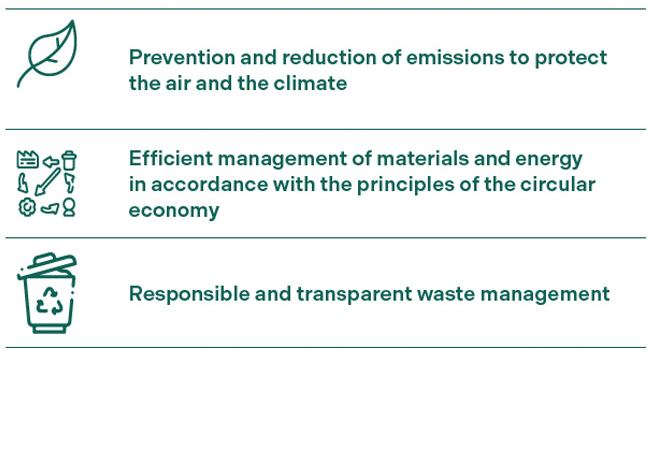
Padana Tubi’s commitment to the environment is refected in concrete and measurable actions, structured around three main areas at both a strategic and operational level:
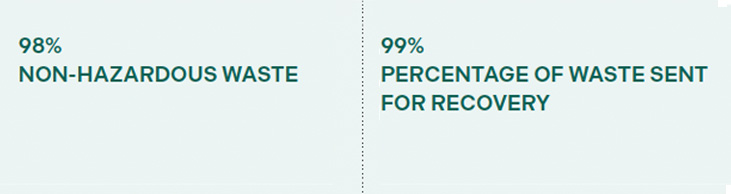
In 2025, the total amount of waste generated was 41,975 tonnes, of which 2% was hazardous waste (870 tonnes) and 98% was non-hazardous waste (41,106 tonnes).
Compared with 2024, there was a slight overall increase in waste generated, amounting to +3 per cent, attributable in part to the maintenance and structural expansion works carried out during the year, in particular the completion of Warehouse P and the preparatory works for the expansion of the storage area at Plant B, in Via Roncaglio.
In 2025, the total volume of water abstracted was 136,470 cubic metres, of which 87% came from wells and 13% from the water mains. Compared with 2024, there has been an overall decrease in water abstraction of 29%, both from wells (-31%, equivalent to 118,287 cubic metres) and from the water supply network (-13%).

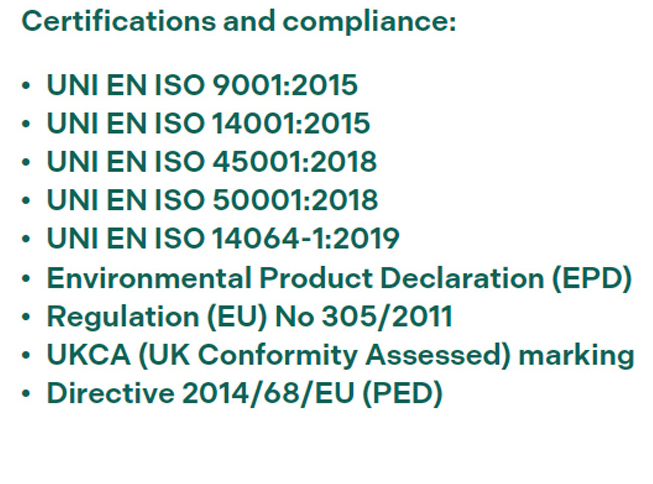
Energy and environmental considerations are now a key factor in Padana Tubi’s investment decisions. During 2025, the company obtained UNI CEI EN ISO 50001:2018 certifcation, with the aim of establishing a structured system for monitoring and improving energy performance.
Incorporating these aspects into business operations makes it possible to analyse consumption, identify areas for optimisation and keep operating costs down.
Energy consumption
The relamping work continued with the replacement of the old neon lights with new LED kits. The timers on the equipment serving the lines (compressors and towers), which were installed in previous years, remain active.
Over the course of the year, a number of welding generators were replaced with new-generation models, which consume less power than the previous triodebased technology. The replacement programme will continue over the next three years to cover further generators.
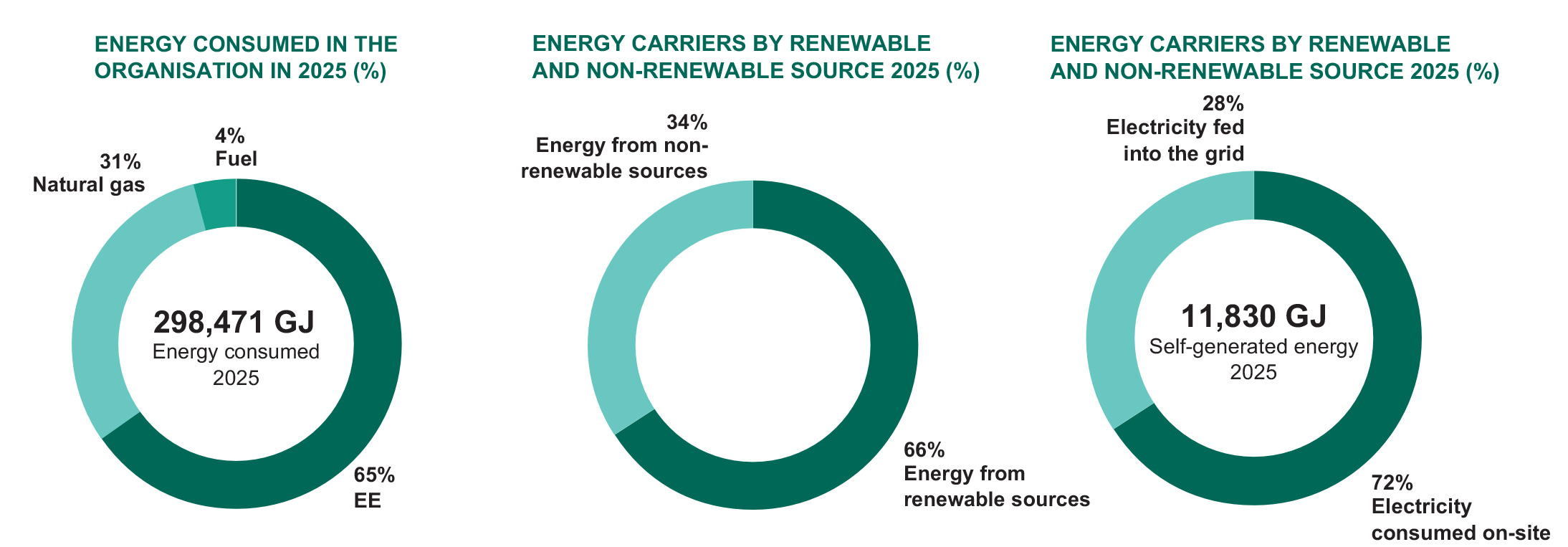
During the reporting period, total energy consumption (electricity, natural gas, diesel and petrol) amounted to298,471 GJ, down by 11% compared with 2024 (335,145 GJ).
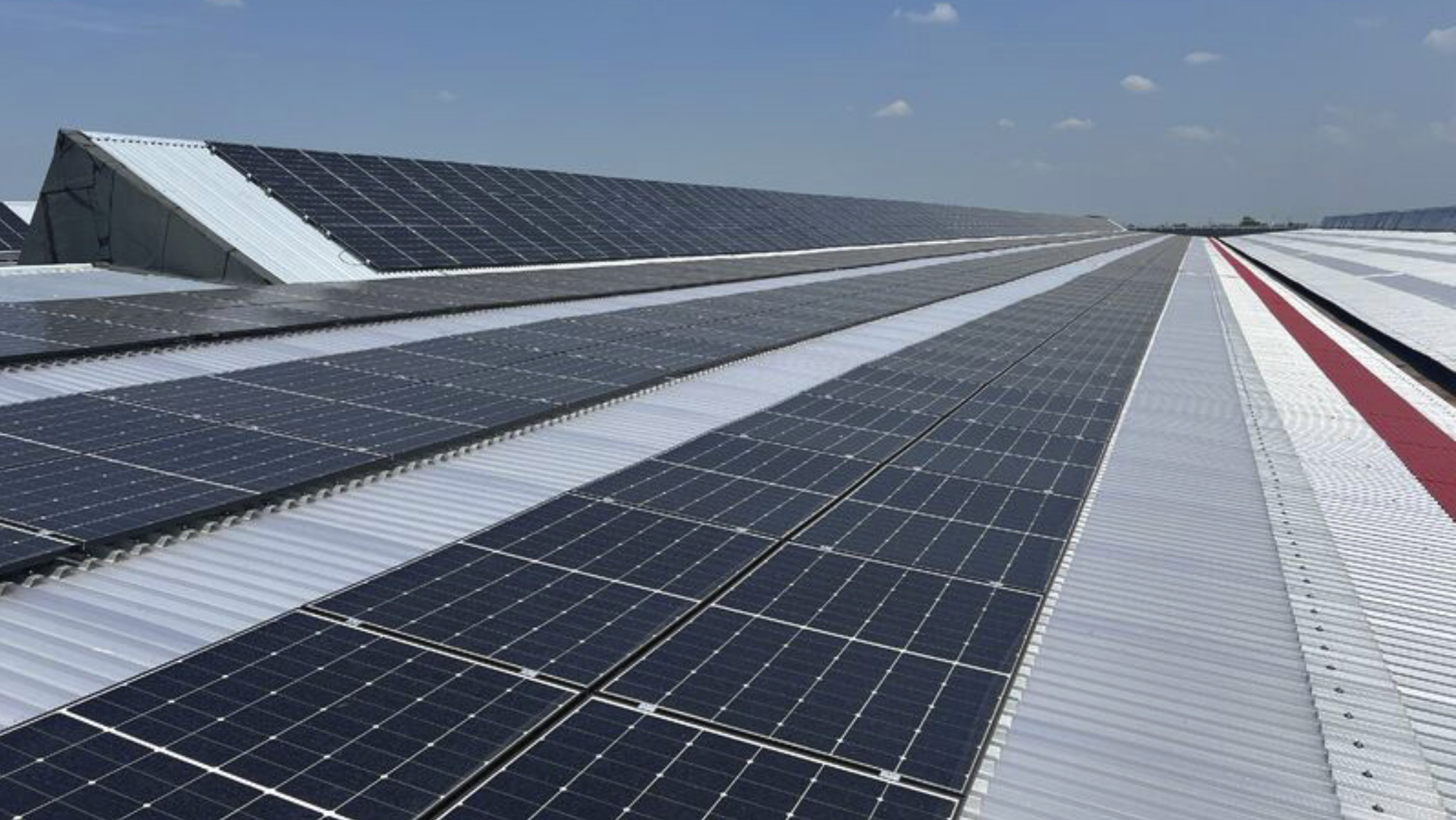
The electricity purchased by Padana Tubi comes entirely from certified renewable energy sources.
Greenhouse gas emissions
Throughout 2025, as in previous years, Padana Tubi continued to account for and monitor its greenhouse gas (GHG) emissions.
For the fifth consecutive year, the organisation’s carbon footprint is undergoing certification in accordance with the UNI EN ISO 14064-1:2019 standard.
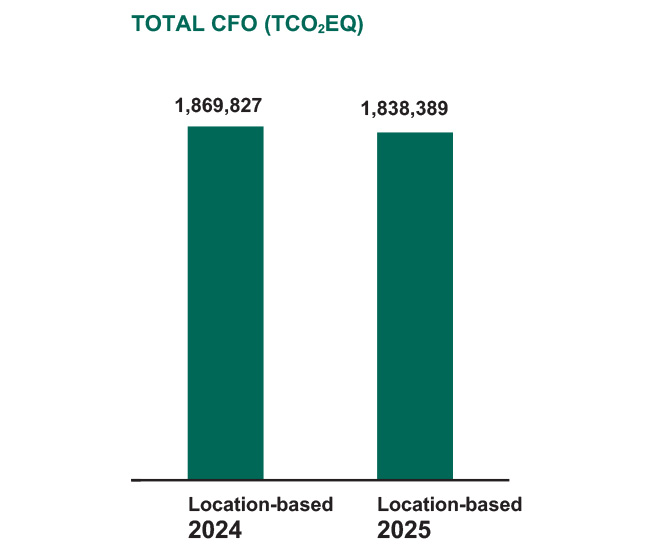
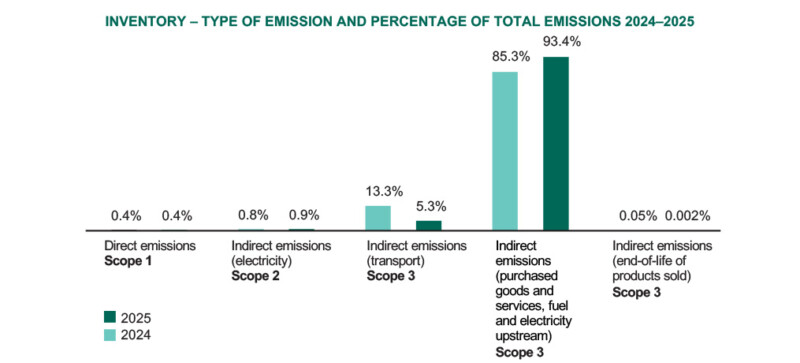
In 2025, Padana Tubi’s organisational carbon footprint, calculated using the ISO 14064-1 methodology and a location-based approach, stands at 1,838,389 tCO2eq, representing a 2% reduction in emissions compared with 2024 and a 9% reduction compared with 2023.